
Construction Accident Lawyer in Atlanta
Fighting for Injured Atlanta Construction Workers Since 2011
Construction work carries real risk. The U.S. Bureau of Labor Statistics recorded 37 construction fatalities in Georgia in 2023, and non-fatal injuries on job sites number far higher. When those accidents stem from someone else’s negligence, injured workers deserve more than a basic workers’ compensation check. At The Fowler Firm, established in Atlanta in 2011, we handle personal injury and wrongful death claims for construction workers who need attorneys willing to fight for compensation beyond minimum benefits.
We give every client direct access to their attorney throughout the case. We’re available 24/7 for emergency legal needs and serve clients in both English and Spanish, which matters on Atlanta’s diverse job sites. If you or someone you love was hurt on a construction site, we’re ready to evaluate your situation and help you understand every option available under Georgia law.
If you’ve been injured on a construction site, contact our Atlanta construction accident lawyers by calling (404) 995-1963
How Georgia Law Governs Construction Site Accidents
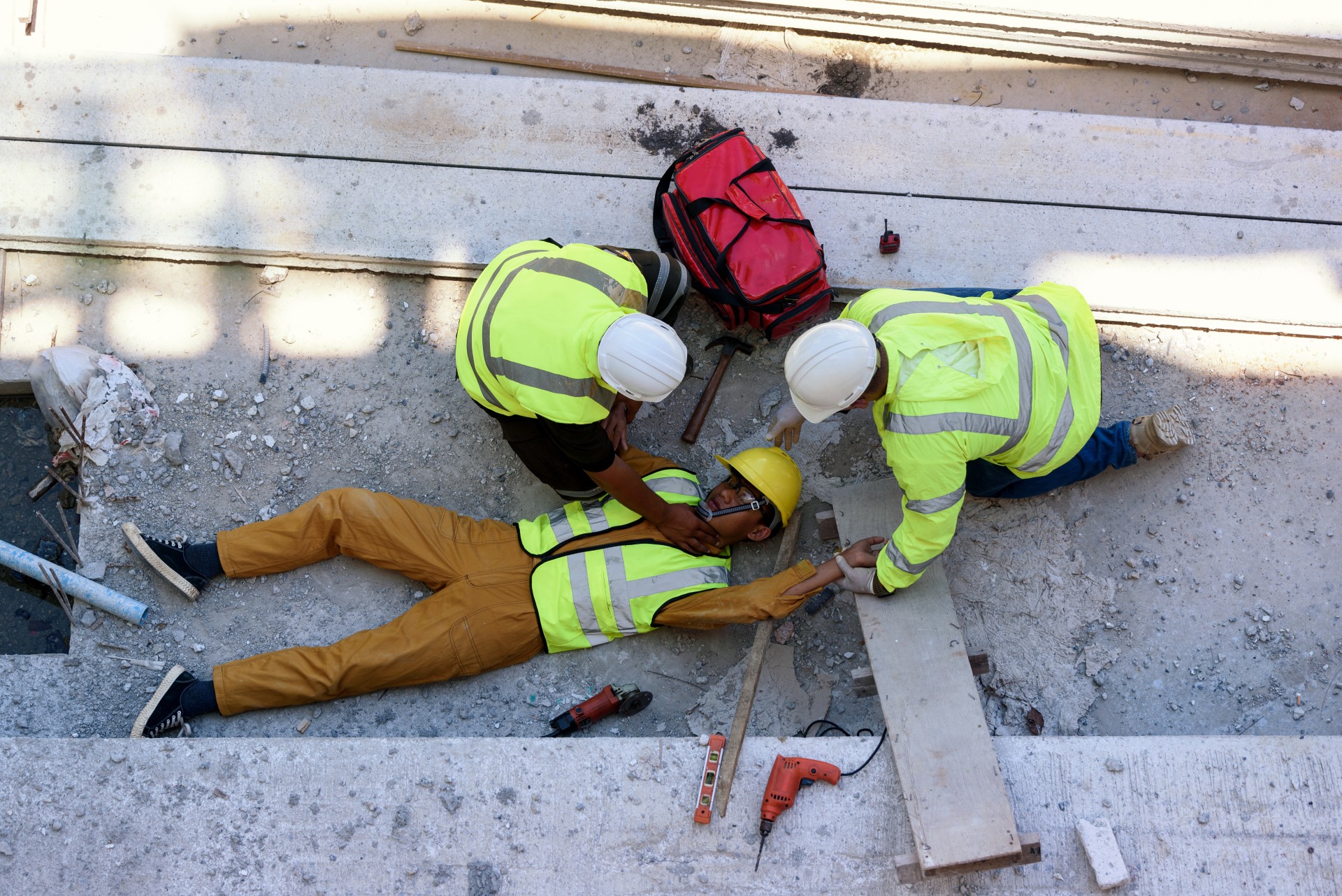
Construction site accidents rarely happen for a single reason. Unsafe conditions, missing safety protocols, inadequate training, workers without proper protective gear, and absent guardrails: any of these can turn a manageable job site into a dangerous one. Georgia construction sites are governed by both state and federal safety regulations designed to reduce these dangers, and when companies fail to comply, injured workers may have legal options beyond standard workers’ compensation benefits.
We represent clients whose injuries result from unsafe conditions, improper safety protocols, or insufficient training on Georgia job sites. We handle both workers’ compensation matters and personal injury claims for construction accident victims. In many cases, clients can pursue claims with the help of experienced personal injury lawyers in Atlanta who understand how construction liability works.
Workers’ Compensation vs. Third-Party Claims in Atlanta Construction Accidents
Injured construction workers in Georgia often have access to two separate legal paths, and understanding the difference matters when it comes to recovering damages they may be owed. Georgia’s workers’ compensation system, governed by O.C.G.A. Title 34, Chapter 9, is a no-fault system that provides medical benefits and partial wage replacement. It does not cover pain and suffering, full lost wages, or diminished earning capacity.
What Workers’ Compensation Covers & What It Doesn’t
O.C.G.A. § 34-9-11 generally prevents employees from suing their direct employer, but it doesn’t stop injured workers from pursuing third-party claims against other negligent parties. Identifying who qualifies as a third party in a construction accident requires careful legal analysis. Under Georgia law, general contractors are typically treated as “statutory employers” of subcontractor employees on the same project, which generally shields them from tort liability under the same exclusive-remedy rules that protect direct employers. Potentially responsible third parties can include equipment manufacturers, property owners not acting as principal contractors, and other entities whose negligence contributed to the injury. A third-party personal injury lawsuit may allow recovery for pain and suffering, full lost wages, emotional distress, and in appropriate cases, punitive damages. Workers’ compensation does not provide these damages.
Deadlines & Dual Claims
Georgia law allows an injured worker to pursue workers’ compensation benefits and a third-party personal injury lawsuit at the same time. If a subcontractor lacks workers’ compensation insurance, Georgia law allows the injured worker to submit a claim to the next contractor in the chain that carries coverage. Under O.C.G.A. § 9-3-33, the statute of limitations for a personal injury lawsuit is generally two years from the date of injury. Workplace injuries must also be reported to an employer within 30 days under O.C.G.A. § 34-9-80. Our construction accident attorneys can help you determine whether a third-party claim applies to your situation and how to protect your rights under both paths.
Common Causes of Construction Site Injuries
Construction site injuries are often caused by factors such as:
- Defective equipment
- Poor maintenance
- Inadequate safety training
- Lack of safety precautions
- Absence of proper safety equipment
Miscommunication between crews and shifts is another frequent cause. In an environment as dynamic as a construction site, a misunderstood handoff or uncoordinated task can trigger an accident. OSHA regulations require employers to provide fall protection, proper safety gear, hazard inspections, and a trained workforce. When those standards are ignored, the resulting violations can serve as evidence of negligence in a personal injury claim.
Types of Construction Accident Injuries
Construction accidents can lead to a range of severe injuries, including:
- Bone fractures
- Muscle damage
- Spinal cord injuries
- Amputations
- Traumatic brain injuries
- Crush injuries and burn injuries
Many victims also suffer long-term conditions that affect their ability to work, including repetitive stress injuries and permanent impairments. In severe cases, construction accidents may result in catastrophic injuries requiring ongoing medical care and significantly impacting quality of life. We also represent families when a construction accident results in wrongful death, pursuing available avenues of compensation under Georgia law.
OSHA Regulations & Atlanta Construction Site Liability
OSHA regulations address fall protection, electrical hazards, equipment operation, and personal protective equipment on construction sites. When employers or contractors ignore those requirements, workers face preventable danger and the violating party may face legal liability.
Atlanta’s rapid construction growth means job sites are subject to frequent inspections. Violations can result in fines, project delays, and civil liability. In a personal injury lawsuit, documented OSHA violations can establish that a contractor or employer failed to meet legally required safety standards, which is often central to proving negligence.
Atlanta’s Construction Environment & the Risks It Creates
Georgia’s humid subtropical climate adds a layer of risk that workers and site managers can’t ignore. Long, hot summers create real exposure to heat exhaustion and heat stroke. Without adequate hydration breaks, shaded rest areas, and acclimatization programs, workers on Atlanta job sites face serious health risks that employers are responsible for managing.
Atlanta’s unpredictable weather compounds the danger. Sudden thunderstorms can leave surfaces slippery and visibility low, increasing the likelihood of falls and equipment accidents. Monitoring weather conditions and maintaining proper drainage are basic precautions that responsible site managers take.
As one of the fastest-growing cities in the country, Atlanta hosts extensive infrastructure development. Projects like the Atlanta BeltLine and ongoing high-rise construction place sites near busy roads and residential areas, creating hazards for workers and the public alike. Heavy machinery moving through populated areas, increased pedestrian traffic near active sites, and compressed timelines all elevate risk. These conditions can also give rise to claims related to truck accidents or unsafe premises, including situations involving negligent security claims.
Who Can Be Held Liable in an Atlanta Construction Accident
Construction sites typically involve multiple companies operating at the same time, which means liability for an accident is rarely straightforward. Under O.C.G.A. § 34-9-8, general contractors are typically treated as statutory employers of subcontractor employees on the same project, which generally grants them the same tort immunity as a direct employer. Potentially responsible third parties can include equipment manufacturers, property owners not acting as principal contractors, subcontractors outside the statutory employer relationship, and other negligent parties depending on the specific facts. When defective machinery contributes to an injury, a product liability claim against the manufacturer may also be available.
Georgia follows a modified comparative negligence rule. A victim found 50 percent or more at fault can’t recover damages, and any award is reduced proportionately when the victim shares fault below that threshold. We investigate construction accident claims thoroughly to identify every party whose negligence contributed to an injury and to counter arguments that try to shift blame onto the worker. Multi-party construction liability is complex, and having a construction accident attorney in Atlanta from the start can put you in a stronger position.
Contact Our Atlanta Construction Accident Lawyers
A construction accident can upend your finances, your health, and your family’s future in ways that workers’ compensation alone won’t fix. At The Fowler Firm, we treat each client’s case individually, keep you directly connected to your attorney from the first call to the final resolution, and serve clients in English and Spanish. We’re available around the clock because injuries don’t happen on a schedule.
If you’ve been injured on a construction site, contact our Atlanta construction accident lawyers by calling (404) 995-1963. We provide legal support throughout Georgia and are ready to help you pursue the compensation you may be entitled to.
Step-by-Step Guide to Reporting a Construction Site Accident in Atlanta
To report a construction site accident, follow these steps:
- Ensure Safety: Secure the accident scene to prevent further harm to anyone involved.
- Seek Medical Attention: Call for medical assistance immediately. Provide first aid if you’re trained to do so, but prioritize getting professional care to injured workers.
- Notify Supervisors: Inform your immediate supervisor or site manager as soon as possible so they can take appropriate action.
- Document the Incident: Record the date, time, location, and the names of all parties involved.
- Collect Witness Statements: Get contact information and statements from anyone who saw what happened.
- Report to Authorities: Depending on the severity of the accident, report it to local law enforcement or occupational safety agencies.
- Notify Relevant Parties: Inform your employer and, if applicable, your workers’ compensation insurance provider. Under O.C.G.A. § 34-9-80, workplace injuries must be reported to your employer within 30 days to protect your right to benefits.
- Preserve Evidence: Keep photographs, equipment, and any documents related to the accident. Construction site conditions can change quickly, so early preservation is critical to building a strong claim.
- Consult Legal Counsel: If you were injured or believe there was negligence involved, consult with a construction accident lawyer at The Fowler Firm for guidance on your legal options.
- Follow Up: Keep records of medical treatment, conversations, and any developments related to the accident.
Reporting accidents promptly protects both your health and your legal rights. Thorough documentation establishes the circumstances and severity of the incident, supports liability determinations, and captures the full scope of your damages for any insurance or legal claim that follows.
Frequently Asked Questions
1. What should I do immediately after a construction accident?
Seek medical attention first, even if you feel fine. Some injuries aren’t immediately apparent, and early documentation of your condition matters. Report the accident to your employer, photograph the scene, your injuries, and any equipment involved, then contact an Atlanta construction accident lawyer before deadlines begin to run.
2. Can I file a workers’ compensation claim if I am injured on a construction site?
Yes. If you’re injured while working on a construction site, you may be eligible for workers’ compensation benefits under Georgia’s system, which covers medical expenses, partial lost wages, and rehabilitation. Workers’ compensation doesn’t allow pain and suffering claims, but in many cases you may also be able to file a personal injury lawsuit against a third party, such as an equipment manufacturer or property owner, whose negligence contributed to the accident. Identifying which parties are available to sue requires careful analysis, since Georgia law grants tort immunity to certain entities in the construction chain.
3. Can I sue my employer if I’m injured on a construction site?
In Georgia, workers’ compensation laws generally prevent employees from suing their employer directly for a workplace injury. General contractors are also typically treated as “statutory employers” under Georgia law, which can extend similar protections to them. However, you may be able to pursue claims against other third parties, such as property owners, equipment manufacturers, or other entities whose negligence caused your injury. Our construction accident attorneys can help you determine whether a third-party lawsuit is available in your situation.
4. What compensation may I recover from a construction accident claim?
Depending on the nature of the accident and your injuries, you may be entitled to compensation including:
- Medical expenses (past and future)
- Lost wages (including future lost earnings)
- Pain and suffering
- Disability or disfigurement
- Rehabilitative services
- Funeral expenses (in cases of wrongful death)
Establishing the full extent of damages requires thorough documentation and expert evaluations covering future medical needs, lost income potential, and non-economic losses. Our attorneys work to assemble the evidence needed to support your claim.
5. How long do I have to file a construction accident claim in Georgia?
The statute of limitations for a personal injury lawsuit in Georgia is generally two years from the date of injury under O.C.G.A. § 9-3-33. For workers’ compensation, you must report your injury to your employer within 30 days. Missing either deadline can jeopardize your right to compensation, which is why contacting a construction accident attorney in Atlanta as soon as possible after an injury matters.
6. What if the construction company doesn’t carry insurance?
If your employer or the construction company doesn’t carry workers’ compensation insurance, Georgia law may allow you to submit your claim to the next contractor up the chain that does carry coverage. Third-party claims against other responsible parties may also be available. Our attorneys can investigate available options so you’re not left without recourse simply because one company lacked insurance.
7. How do construction accident lawyers build a strong case?
Our attorneys gather medical records, accident reports, and witness testimony to establish liability. We may also work with expert witnesses on construction safety standards and OSHA compliance to demonstrate how a violation contributed to your injury. Because construction sites involve multiple companies and shifting conditions, starting a thorough investigation early is essential to preserving the evidence a successful claim requires.
8. What role do third-party claims play in construction accidents?
Third-party claims allow injured workers to seek compensation beyond what workers’ compensation provides, including pain and suffering, full lost wages, and other losses the workers’ compensation system doesn’t cover. These claims can be filed against entities not shielded by Georgia’s exclusive remedy rules, which requires careful analysis of each party’s role on the project. Depending on the facts, viable third parties may include equipment manufacturers, property owners unrelated to the employment relationship, and others whose negligence contributed to the accident.
9. Why does timely legal action matter in construction accident cases?
Construction site conditions and equipment can change quickly after an accident, making early evidence preservation critical. Acting promptly also ensures you meet the statute of limitations, protecting your right to file at all. Beyond deadlines, early involvement by a construction accident attorney in Atlanta allows for a more complete investigation while evidence and witness recollections are still fresh.
10. What sets The Fowler Firm apart in handling construction accident cases?
The Fowler Firm has focused on personal injury claims since its founding in Atlanta in 2011. We give clients direct access to their attorney throughout the case, communicate regularly, and treat each matter individually rather than following a one-size-fits-all approach. We’re available 24/7 and serve clients in English and Spanish, reflecting our commitment to Atlanta’s diverse workforce and community.
11. What are the common challenges in construction accident claims?
Construction accident claims are complex because they often involve multiple contractors, overlapping insurance coverage, and the intersection of workers’ compensation and personal injury law. Identifying which party bears responsibility when several companies are working on the same site requires detailed investigation and familiarity with Georgia’s modified comparative negligence rules. The Georgia State Board of Workers’ Compensation also has its own procedural requirements that must be navigated alongside any civil claim.

Why Choose The Fowler Firm?
-
Litigation ExperienceWe rigorously litigate cases and negotiate settlements. We are experienced litigators and are willing to fight for you.
-
Dedicated & DrivenWe treat each case as though it is going to go to trial to ensure that you obtain the compensation you deserve.
-
CommunicationWe communicate regularly to ensure you understand every step of your case. You will have direct access to your attorney.
-
Personable TouchWe genuinely care about you and strive to ease your pain. It is our goal to reduce the stress of an already difficult situation.
Hear From Our Happy Clients
At The Fowler Firm, your satisfaction is our priority! See for yourself what our clients have to say about working with us.
-
“Professional, courteous, patient, and prompt.”
I have had the fortunate opportunity to work with the Fowler Firm twice. In both cases, the staff was professional, courteous, patient, and prompt. My cases were settled with ease. I would highly recommend the Fowler Firm.- Cynthia J. -
“They are the best!”
I had an excellent experience with the Fowler Firm. They are top-tier and very professional when it comes to their clients. This Firm will never let you down. They are the best!- Connor F. -
“Leaving no stones unturned”
The Fowler Firm staff’s knowledge and actions provided me with a complete sense of confidence. They worked diligently on the case with my best interests at the forefront. The Fowler Firm staff was a pleasure to work with and was very thorough, “leaving no stones unturned” throughout the process. I highly recommend the firm.- L. M. -
“I'm forever grateful!”
Thank you to the entire team at "The Fowler Firm" for their guidance, expertise, and professionalism. A special shoutout to Attorney Echols and Krystal Cruz. They both were incredibly responsive and kept me informed throughout the entire process. I'm forever grateful! I highly recommend THE FOWLER FIRM!- Crystal S. -
“Highest level of professionalism and legal expertise.”
“I’m incredibly grateful for their dedication and the compassionate way they handled every step of the process. I highly recommend the Fowler Firm to anyone in need of trusted legal representation.”- Marlon N. -
“Professionalism and friendly customer service.”
I will surely recommend the Fowler Injury Firm to anyone seeking injury related support. They handled our case with professionalism and friendly customer service.- Yvette K. -
“We highly recommend them.”
The Fowler Firm handled our case with professionalism and good, friendly customer service. We highly recommend them to anyone looking for injury related services.- Samuel K. -
“The Fowler Firm is the name to trust.”
“From the moment I contacted The Fowler Firm, I felt like more than just a client—I felt like family. They listened to me with genuine care and treated my case with the same attention and urgency they would give their own loved ones.”- Thomasina E.